



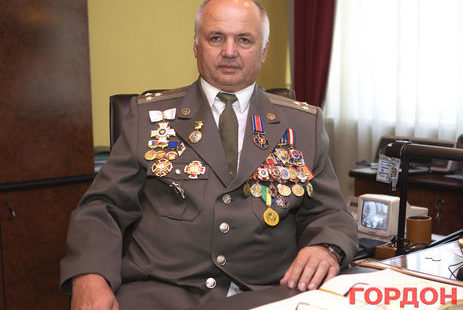
Interview with O.M. Prymachuk, Director of the Central Design Institute, State Enterprise of the Ministry of Defence of Ukraine, for Gordon magazine
Pryymachuk: During the nuclear disarmament of Ukraine, everything was destroyed, including secret documentation. But I have something left. Just in case
The claims that in the first years of independence Ukraine could not maintain and service its own nuclear potential, which allegedly had outlived its useful life and become unusable, do not correspond to reality. Despite the enormous pressure from the United States and Russia, official Kyiv could and should have preserved the most effective and powerful component of its nuclear potential – 46 modernized solid-fuel intercontinental ballistic missiles SS-24, said “GORDON” the director of the Central Design Institute of the Ministry of Defense of Ukraine Oleg Priymachuk. It was he and his team who were among those who created nuclear weapons, and after the signing of the Budapest Memorandum they developed a unique project to eliminate missiles and launchers, as well as neutralize dangerous rocket fuel.
Oleg Pryymachuk: If the guarantor countries of the Budapest Memorandum fulfill their obligations in this way, then it is not a sin for us to restore the drawings of nuclear facilities. We are fools, of course, who gave away our third-largest nuclear potential in the world, now we are paying the price
Almost 22 years ago, in June 1996, Ukraine finally lost its nuclear status, completing, in accordance with international agreements, the process of transferring its strategic nuclear weapons to the Russian Federation. In parallel, official Kyiv liquidated its own carrier rockets and infrastructure facilities. The last Ukrainian mine launcher for launching strategic intercontinental missiles was destroyed in 2001.
In fact, the country's nuclear disarmament began with the proclamation of the Declaration on State Sovereignty of Ukraine on July 16, 1990, which enshrined three principles: "not to accept, not to produce, and not to acquire nuclear weapons." In the first years of independence, Ukraine signed a number of international treaties and agreements on nuclear disarmament, the main of which was the Budapest Memorandum of December 5, 1994. According to the document, Ukraine renounced the world's third-largest nuclear potential, and the signatory countries - Great Britain, Russia, and the United States - pledged to be guarantors of Ukraine's independence, sovereignty, and territorial integrity, as well as to refrain from using any weapons, not just nuclear, against the country.
The complete abandonment of the official Kyiv nuclear arsenal was a fatal mistake, which was clearly demonstrated by the events of 2014, the director of the Central Design Institute of the Ministry of Defense of Ukraine, military builder and engineer, reserve colonel Oleg Pryymachuk is convinced. It was he, together with his team, who developed a unique project to eliminate nuclear weapons. Unique because no one in the world had ever done this. The implementation of the project, according to Pryymachuk, was carried out with tears in his eyes, because both he and his team once took part in the creation of Ukraine's nuclear potential.
In an interview with the GORDON publication, Oleg Pryymachuk told what turned out to be the most difficult part of eliminating nuclear weapons, how he tried to reach the Ukrainian leadership to save at least 46 modernized SS-24 missiles, how he got rid of the "watchers" assigned to the institute during the presidency of Viktor Yanukovych, and how a few years ago Russia thwarted a large-scale Ukrainian project to build a cosmodrome in Brazil.
Ukraine itself was engaged in nuclear disarmament of Ukraine, and moreover, we spent much more money on it than the US allocated.
– Your institute was developing a project to eliminate Ukraine’s strategic nuclear weapons. As a result, 13 SS-19 missile systems and five SS-24 missile systems were neutralized, correct?
– It was a unique program. No one in the world had ever eliminated nuclear weapons. It was impossible to neutralize them a priori, only to use them for their intended purpose.
– When nuclear weapons were created, was there no provision for their elimination, other than by striking the target?
– Yes, in Soviet times, the design of nuclear missile weapons did not provide for repair or disassembly at all. For example, a conventional warhead can be unwound, the fuse removed from the nose, the sleeve disconnected from the blank, the powder poured out, the capsule removed – and that’s it, there is no projectile. But nuclear weapons are complex and do not provide for disposal at all.
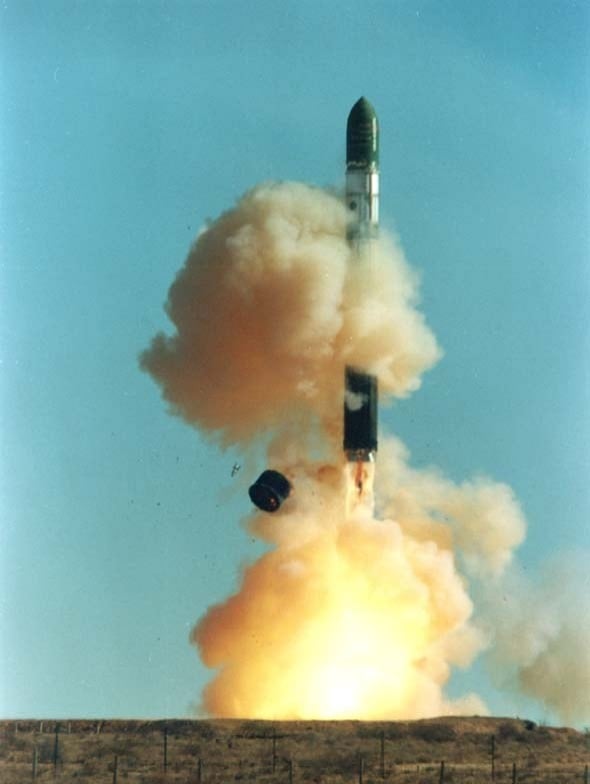
Launch of the Dnipro rocket, designed and manufactured in Ukraine. Photo: uk.wikipedia.org
– It seemed to me that after joining international agreements and treaties on the non-proliferation of nuclear weapons, Ukraine should have simply given up the warheads, and not taken on the headache of disposing of them.
– (Laughs.) No, of course not. Ukraine itself was engaged in nuclear disarmament of Ukraine, and besides, we spent much more money on it than the US allocated for the so-called program of free financial assistance for the elimination of nuclear weapons.
– Why so-called, if the US really allocated serious financial resources?
– “Serious”? The Americans have allocated approximately $750 million to Ukraine for the elimination of nuclear weapons. This is a fifth of the cost of the famous American Stealth fighter complex, its infrastructure and maintenance, which costs approximately $4 billion!
– Where are you headed?
– We gave away all our nuclear weapons, and in return we couldn’t even buy a wing from a Stealth aircraft! For the Americans, $750 million is a pittance. But it was for this amount that Ukraine was deprived of nuclear weapons! After all, at that time we had 176 intercontinental ballistic missiles: 130 liquid-fueled SS-19 and 46 solid-fueled SS-24.
– The initiator of nuclear disarmament of Ukraine, the first president Leonid Kravchuk, in an interview with the publication “GORDON”, claimed that in the 1990s we could not maintain and service our nuclear weapons – it was too expensive, plus the warheads were expiring, which could have unpredictable consequences.
– Either Kravchuk was not told everything, or Leonid Makarovych did not want to hear everything. I don’t know where he got the information that Ukrainian launchers were outdated.
In 1987, I went to Khmelnytskyi for the latest reconstruction of the launchers. A launcher is a strategic well-shaft from which a missile carrying a nuclear warhead takes off. Out of 150 launchers, we completely modernized 46, that is, we installed new, completely unique, so-called 60s solid-fuel vehicles.
Before that, liquid rocket fuel made of very dangerous and highly poisonous heptyl was used. And solid fuel was more reliable, they could be stored for a longer period, they were less demanding in operation. As far as I know, there was a new generation of warheads.
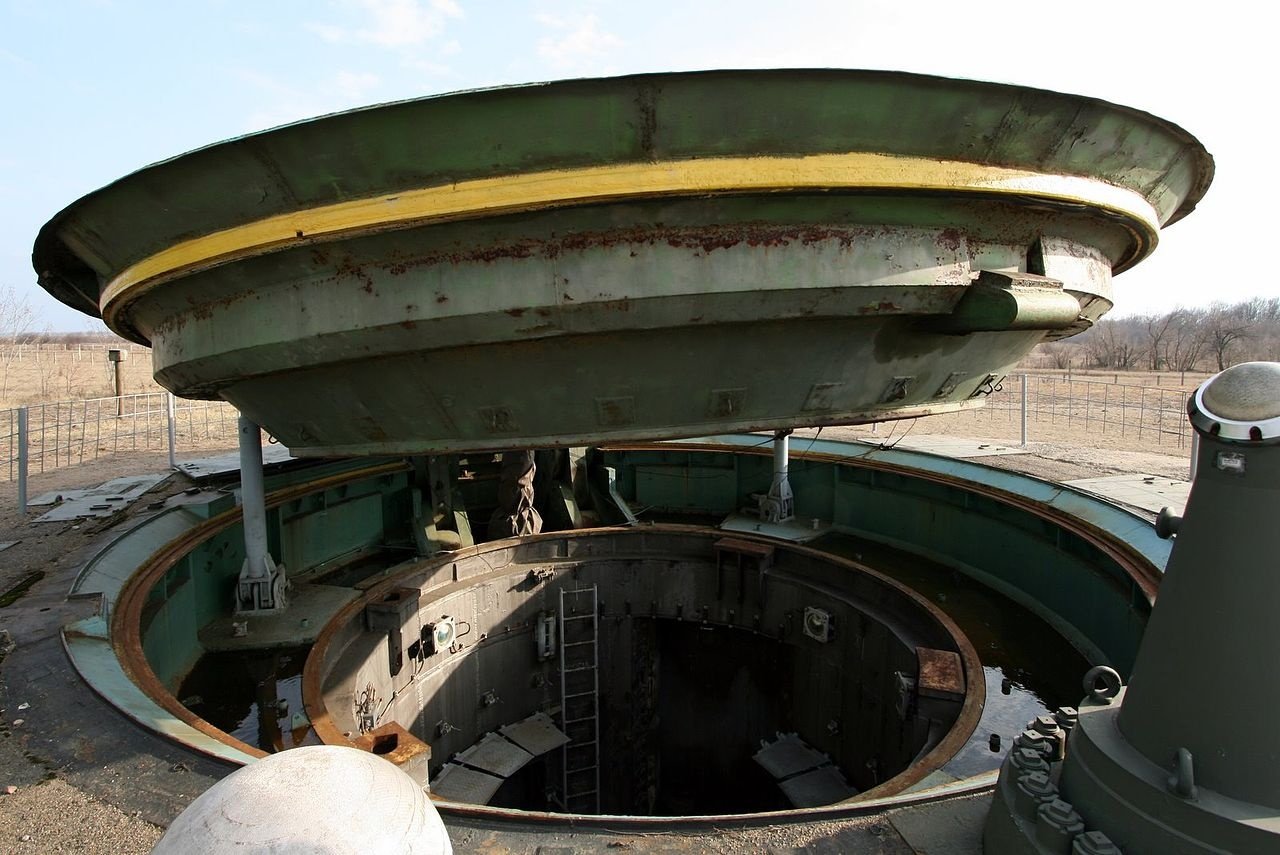
Exit from the launch pad of an intercontinental ballistic missile. Photo: rvsp.net.ua
Nuclear weapons had to be given up due to very strong pressure from the US and Russia and the inability of Ukraine's leaders to resist this.
– You are talking about the second half of the 1980s, when the military power of the USSR was still at full strength. And I am asking about the first half of the 1990s, when independent Ukraine was completely cashless.
– In 1987–1990, we completed the modernization of 46 launchers, replacing liquid-fueled ones with new solid-fuel systems. 46 facilities were modernized, they could be in working condition for a very long time!
– Perhaps Kravchuk, as president, knew more secret information than you about Ukraine's financial capabilities and the state of its nuclear weapons?
– But the country did not collapse due to lack of money. Nuclear weapons had to be given up due to very strong pressure from the US and Russia and the inability of our state leaders to resist this. The Kremlin really did not want Ukraine to have nuclear weapons, because it understood that with the acquisition of independence, Kyiv would move further and further away from Moscow.
– When did nuclear missiles actually appear in Ukraine?
– In the 1960s and 1970s, they already started building. In the entire Soviet Union, the largest number of missiles was in Ukraine. Russia did not have so many, taking into account the number per square kilometer of territory. And all because we are territorially closer than all the Soviet republics to the western borders.
– Scientists, military personnel, and engineers who once created nuclear weapons participated in the development of the disarmament program. How did they perceive the decision to completely disarm Ukraine?
– Everyone, of course, was shocked. None of us understood this decision of the president. Didn’t understand! We held a meeting, I was there. Academician Paton took the floor, said: “Well, we received such an instruction from the president, what are we going to do?” Scientists, chemists, physicists, representatives of the missile army are sitting there – everyone who created nuclear weapons – and half of them have tears in their eyes.
– Which of you tried to achieve a personal meeting with Kravchuk to convey a different opinion to him?
– There were probably reports. I suppose that if we had nuclear weapons left, 60% of cooperation would depend on Russia, where the main developments were. Although… After all, the SS missile carriers (they are also called “Satan”) are the development of our Ukrainian design bureau “Pivdenne”.
Nuclear disarmament began under Gorbachev, after the collapse of the USSR, the Americans put a lot of pressure on both Ukraine and Russia. Moscow stood its ground, but we didn’t. There were negotiations, the US quickly and easily agreed to pay $750 million in exchange for Ukrainian nuclear weapons. But the Americans got back half of this amount under the Nunn-Lugar program.
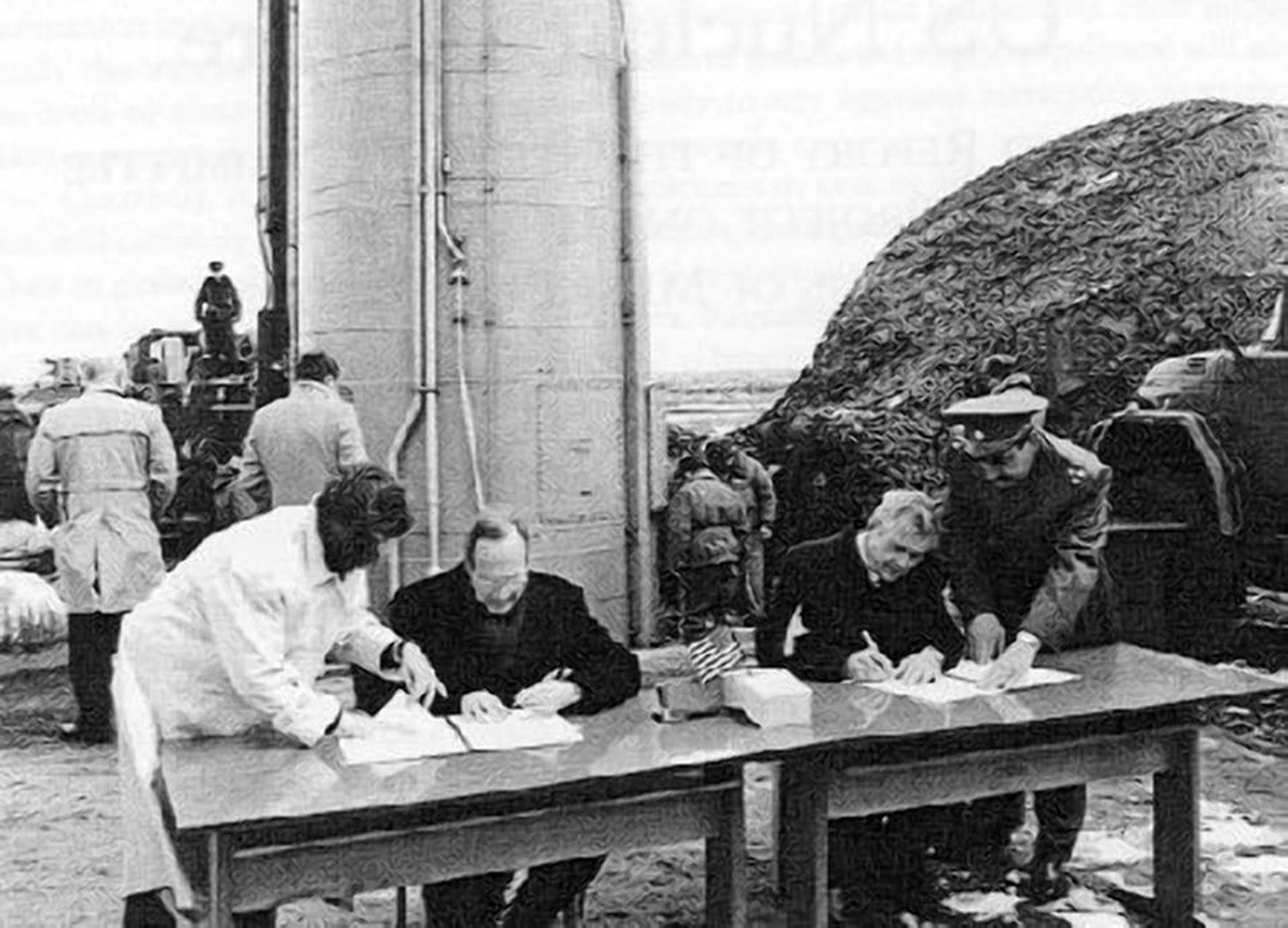
The US and Ukrainian defense ministers sign an agreement on financing the elimination of strategic weapons near the SS-19 intercontinental ballistic missile launcher. Photo: Strategic Missile Forces Museum / Facebook
– Are you talking about the Joint Threat Reduction Program, developed in 1991 by US Senators Sam Nunn, Democrat, and Richard Lugar, Republican?
– Yes. The program provided that the United States would assist the countries of the former Soviet Union in the disposal of decommissioned nuclear, chemical, and bacteriological weapons. The assistance was free of charge, but on the condition that American commercial companies would participate in the liquidation. That is, the Americans came to Kyiv, announced a tender, knocked Ukrainian construction companies that wanted to participate in the liquidation of nuclear weapons, lowered the price, and then also sold Ukraine special equipment, the cost of which was included in the aforementioned $750 million.
But we were talking about a colossal infrastructure! Just one regiment had 10 sites, each with 10 launch shafts, plus the associated railways and roads, special underground structures, special communication hubs, autonomous power units, backup systems, etc. A huge, unique system…
– …the annual maintenance and service cost..?
– …no one will tell you this, it’s classified information. Yes, the amount is colossal, but at least 46 modernized strategic solid-fuel SS-24 missiles could have been left. Plus, no one has yet calculated how much Ukraine itself had to pay in addition to the allocated US $750 million for the elimination of its own nuclear weapons.
The most difficult thing was to neutralize heptyl, a very toxic substance in rocket fuel. One gram of the substance at minus 16 degrees per bucket of water - all life around dies.
– How much time passed from the beginning of the development of the liquidation project to the neutralization of the last nuclear missile?
– Four years, probably. The last stage was the reclamation of the land where the missiles were located: they removed the cables, destroyed the roads, blew up the mines up to eight meters deep, filled them in, closed the warehouses, storage facilities, maintenance points, repair bases… in general, everything was dismantled and sown with sunflowers.
– I'm trying to imagine your situation: decades of developing top-secret facilities, and then destroying it all under the full control of a former ideological enemy...
– We cried, of course, our hearts ached. It was very sad, because everything was developed here, at the Central Design Institute. Yuzhnoye Design Bureau created the technology of the rocket carrier, and our institute created everything else: infrastructure, communications, mines.
– What was the most difficult thing during the elimination of nuclear weapons?
– Neutralize heptyl – a very toxic substance contained in rocket fuel. You can’t bury it in the ground: one gram of this substance at minus 16 degrees Celsius per bucket of water – all life around it dies. A terrible poison that can only be burned in a rocket during launch.
– How much heptyl was in one rocket?
– I don’t remember exactly, I think it was about 25 tons. Only in the village of Shevchenkove near Kharkiv was a storage facility designed for 60 thousand tons of rocket fuel with partial neutralization.
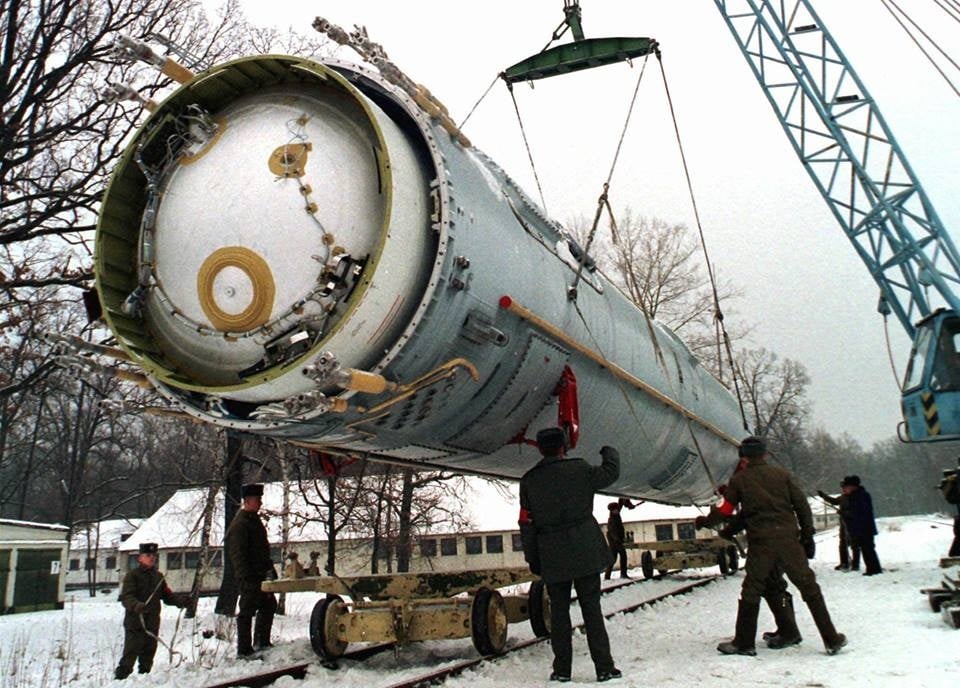
December 24, 1997. Soldiers prepare an SS-19 ballistic missile for disposal in the yard of the largest Soviet missile base in Vakulenchuk, Zhytomyr region. Photo: Museum of Strategic Missile Forces / Facebook
In addition to neutralizing the heptyl, there was another issue: no one in the world knew how to basically eliminate nuclear weapons, how long it would take, and how much it would cost. No one knew because no one had ever done it before us.
They began to figure out who could do what at what stage. Physicists did their thing, chemists did their thing, then it was the turn of the military: “What can you do?” We can remove the warhead, quickly replace it with an equivalent, so as not to abruptly stop the entire system, which is similar to a living organism. Then we can slowly, gradually turn off the system and drain the fuel.
– And heptyl?
– We delivered it to three storage facilities across Ukraine. We developed a special container with three walls, plus special gutters: if even a little bit of the substance drips, the leak indicator instantly turns on and the water flushing automatically begins.
– What if the enemy DRG gets to the shelters?
– I hope the storage facilities are well guarded. Unfortunately, we were unable to use the substance for the spaceport in Brazil at the time, the expiration date has passed.
By the way, even after the fuel was drained, at least 50 liters of the poisonous substance remained in the rockets, it was stuck in the small tubes-corks. 50 liters of the infection, can you imagine?! And it had to be neutralized in a special facility. We designed a special neutralization station in Dnipro, where the rockets were taken after the initial fuel drain. There, the remains of the poison were evaporated and washed out in an industrial way. And then, the rocket was cut with special cutters.
After the collapse of the USSR, Ukraine had 300–400% more weapons than needed for defense. Maintaining this hardware cost more than maintaining nuclear warheads.
– If you were alone with Kravchuk right now, what would you say to him?
– I had such an opportunity. On a hunt. We are both passionate hunters, we were supposed to go to Poltava region to hunt ducks. Kravchuk has not been president for a long time. The meeting did not take place, he did not come.
– So what will you tell him if you meet him?
– I will say: “Leonid Makarovich, when you were told that Ukraine was not capable of maintaining nuclear weapons, you were either lied to or tried to please.” Although I understand, then you had to choose: independence or nuclear weapons.
After the collapse of the USSR, Ukraine had 300–400% more troops and weapons than were needed to protect its territorial integrity. After the withdrawal of Soviet troops from the GDR, most of the weapons were brought to Ukraine.
– I don't understand what you're getting at?
– Moreover, maintaining all this iron cost more than maintaining nuclear warheads. Well, it was possible to sell part of the weapons to maintain at least 46 new nuclear missiles! In the same Russia at that time there were only 10-12 such modernized missiles, and in Ukraine – 46.
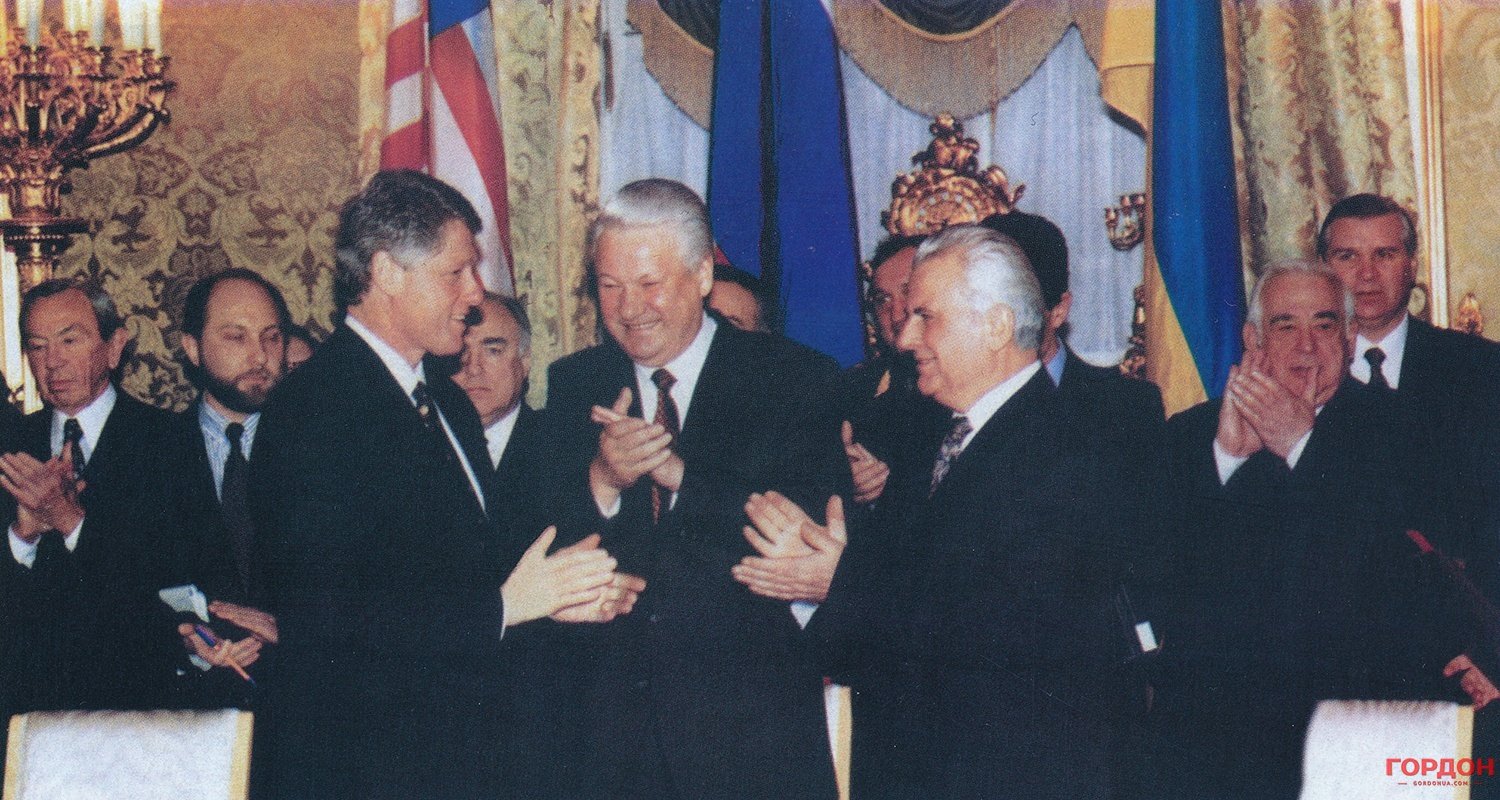
January 1994, Moscow. US President Bill Clinton, Russian President Boris Yeltsin and Ukrainian President Leonid Kravchuk after signing the Agreement on the Elimination of Strategic Missile Warheads in Ukraine. Photo: from the personal archive of Leonid Kravchuk
– Did the Americans control every stage of the project: from development to direct disposal?
– Absolutely everything. Since the early 1990s, delegations from Washington have been coming to Kyiv constantly.
In Soviet times, the leadership of the Kyiv Military District, to which the entire Ukrainian SSR was subordinated, requested permission from the General Staff in Moscow to cross the threshold of our institute, everything was so secret here. And now imagine: 1994, negotiations on nuclear disarmament, and an American colonel just walks into the institute! The SBU ran around in panic: a NATO military man at a secret Ukrainian facility! And we at the institute were also in shock, we were not used to this.
Negotiations began, then the development of the project. The main thing that worried the Americans was safety. They demanded to describe in detail, step by step, the entire sequence: open a hatch weighing 100 tons, remove this, start that... At each step, they demanded to write a separate chapter "Safety Measures". We had 23 volumes of such "measures". Then I went to Baltimore twice with the chief specialist Boris Mikhailovich Winter, we defended our own project on nuclear liquidation and ensuring safety.
– And what about the Americans, who were stunned by the talent of Soviet military engineers, designers, and builders?
– Their eyes showed admiration for how we implemented the project. After all, they themselves had no idea how to do it. By the way, we need to patent the development, we haven’t gotten around to it yet. I think when we brought them the project, they secretly checked everything somewhere in Colombia.
– So?
– They used our technology to dismantle some of their nuclear missiles to test everything in practice. The Americans checked everything everywhere, recorded everything. I remember when we were dismantling a huge strategic nuclear missile, an American colonel watched with wide eyes and kept repeating: “Guys, what a powerful weapon, what a powerful weapon!”
As experts, they envied and admired Ukrainian nuclear missiles. The American missiles had a light casing. They assembled their missiles – both space and combat – vertically, while ours had horizontal assembly, meaning the structural features of the hull and casing were much stiffer and more reliable.
If the guarantors of the Budapest Memorandum fulfill their obligations in this way, it would not be a sin for us to restore the drawings of nuclear facilities
– Do you have the feeling that you, as a sincere Ukrainian, could not have destroyed everything, that you had to hide some kind of drawing? Just in case.
– What are you talking about, it's impossible. Everything was destroyed, including the secret documentation.
– Oleg Mikhailovich…
– (Long pause.) Well, I have something left in the archive. Just in case.
– So if it gets too hot, can we regain our nuclear status?..
– (Smiles.) I have known Igor Petrovich Smeshko for a long time. We met once, he was the military attaché of Ukraine in the USA at the time. Well, I told him: so and so, they are pressuring me to destroy everything. In our case, the Budapest Memorandum simply stipulated that everything should be destroyed, even the drawings... In general, I fulfilled the requirements, but if it is necessary to restore it, there are no questions.
– God bless you!
– (Laughs.) Well, if the countries that are guarantors of the Budapest Memorandum fulfill their obligations in this way, then it would not be a sin for us to restore the drawings of nuclear facilities. We are fools, of course, who gave away our third-largest nuclear potential in the world, and now we are paying the price.
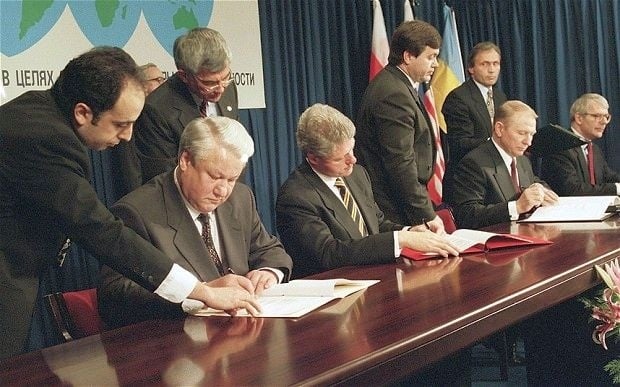
December 5, 1994, signing of the Budapest Memorandum. Signed by Russian President Boris Yeltsin, US President Bill Clinton, Ukrainian President Leonid Kuchma, and British Prime Minister John Major. Photo: wikipedia.org
– Скільки зараз у Росії ядерних боєголовок?
– Точно не знаю, але Путін протягом 18 років правління коштом нафтогазових грошей наростив серйозний потенціал. І нехай вас не заспокоюють невдалі запуски російських ракет чи авіаносець “Адмірал Кузнєцов”, що смішно димить біля берегів Сирії. Повірте, Росія дуже збільшила свій військово-промисловий потенціал.
Putin canceled many of Yeltsin's decrees that contributed to the sale of the military-industrial complex, forced factories and design bureaus to work for the military industry, built a new cosmodrome instead of Baikonur, where Kazakhstan had to pay rent for missile tests and launches. In general, we have a very strong enemy, we cannot underestimate him.
– How many hacker attacks have there been on your institute or attempts to recruit employees to obtain secret information?
– First, we are well protected. Second, our archive is not strategic: practically everything we have is stored, and it has been like this in Russia since the times of the USSR, when all projects were typical.
In Soviet times, we were a branch of the “twenty,” that is, the Central Design Institute No. 20 in Moscow. In total, there were two such military institutes: CPI No. 31, which designed the technology of cosmodromes and missile positions, and CPI No. 20, which designed nuclear facilities. After the collapse of the USSR, they were privatized in Moscow, and Putin returned everything to state ownership.
As for secrets... Thanks to such "Ukrainian" defense ministers as Salamatin and Lebedev, Moscow did not need to conduct any hacker attacks or recruitment in Ukraine - everything was at hand.
За правління Януковича всім “смотрящих” ставили. Це люди Саші-стоматолога, на всіх держпідприємствах сиділи
– До речі, як вам працювалося за ставлеників Януковича – громадянина РФ Дмитра Саламатіна, якого призначили міністром оборони України у 2012 році, і його наступника Павла Лебедєва, який очолював відомство до 27 лютого 2014 року?
– There was a terrible administrative shake-up, directors were changed at all state-owned enterprises. I don’t understand at all how a citizen of the Russian Federation, Salamatin, was appointed to the position of Minister of Defense of Ukraine. And Lebedev was a military accountant by education, it is unclear how he became a millionaire and a minister. Such people have no homeland, they have only one deity – money.
The way Lebedev behaved is beyond description. He called me to the mat: “If this year your institute does not carry out design work worth 43 million UAH, I will remove you from your position.” He committed a gross violation in the management of state-owned enterprises, simply stipulating in the contract: if he does not carry out orders worth 43 million UAH, he will be fired. And at that time I had only 18 million UAH worth of design work, the Ministry of Defense gave the institute zero orders at all. We had to look for orders on the side, we did everything we could.
During Yanukovych's rule, they put "watchmen" on everyone. These were the people of Sasha the dentist (Yanukovych's eldest son Oleksandr - "GORDON"), there were a lot of them, they were in all state-owned enterprises. They also tried to put a "watchman" on me.
– What exactly did it look like?
– For example, for Salamatin, they call me to the Ministry of Defense and say: so and so, your company must deduct a certain amount every month or you write a statement of your own free will. It was not Salamatin personally, but his assistants-advisors who voiced it – civilian jackets, which for some reason freely walked around the Ministry of Defense and the General Staff. I threw up my hands: where does the state design institute get such money? They say: “Take it wherever you want.”
– You refused to pay cash to Yanukovych’s “watchers” and were “sanctions” applied to you?
– One after another, inspections began: the control and audit department, the military prosecutor's office, etc. They searched the entire institute, from top to bottom. The task was to find something to catch me in to remove me. They checked and found nothing.
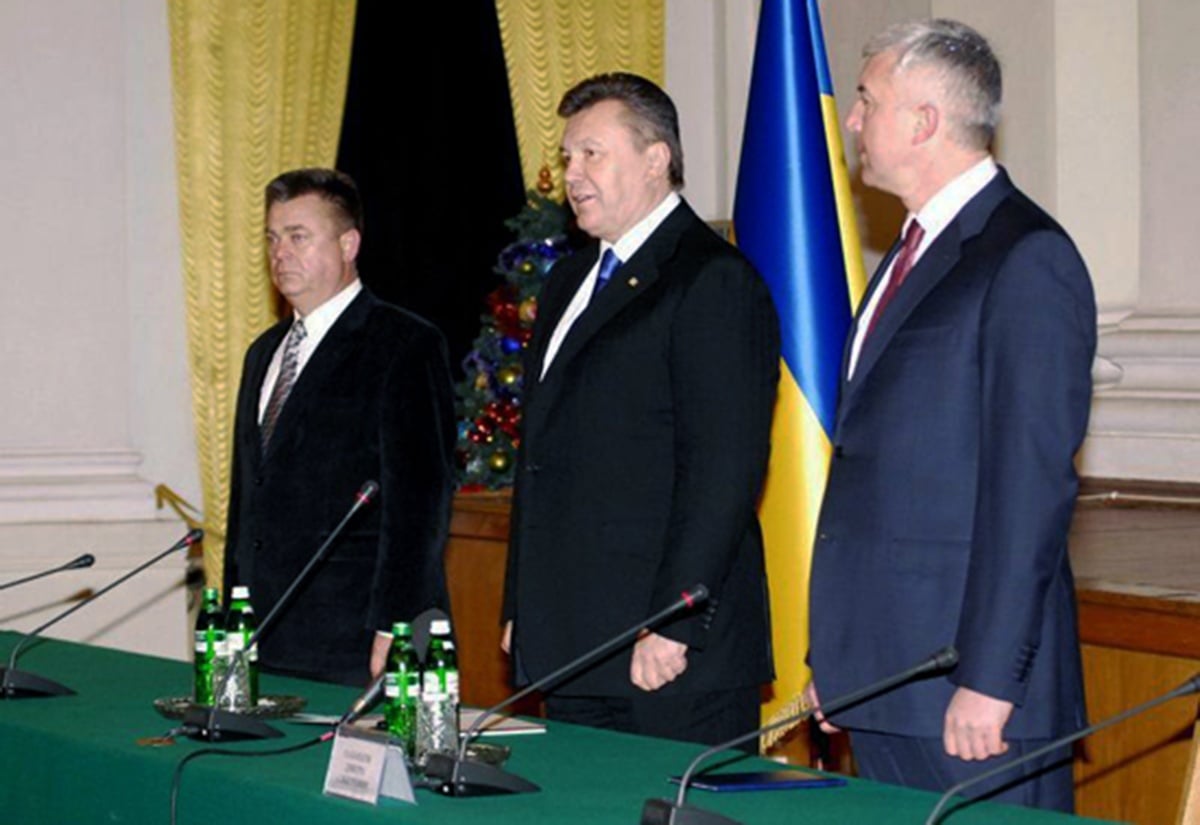
Павло Лебедєв, Віктор Янукович і Дмитро Саламатін. Фото: mil.gov.ua
По-перше, у нашого інституту світова популярність, ризикувати іміджем не можна. По-друге, у нас усього дві непривабливі будівлі майже на околиці Києва. По-третє, якби я або хтось із моїх співробітників “відмивав гроші” – нас би давно розігнали, а в нас абсолютно прозорі бухгалтерія, виплата зарплати і соцпакета, банківські транзакції. Та й обіг в інституту невеликий порівняно з іншими держпідприємствами, щонайбільше $1–3 млн на рік, та й то в кращі часи, коли космодром проектували.
Наступного року, уже за міністра оборони Лебедєва, знову почалися наїзди на інститут, перевірки. Затримали продовження зі мною контракту на посаду директора.
– Чим закінчилася спроба насадити вам “смотрящого”?
– Коли я відмовився виконувати їхні вимоги, вони майже відступили, але стали вимагати, щоб в інституті працювала їхня людина: “Зробиш його своїм заступником із правом доступу до печатки та підпису”.
Він будівельник якийсь, я глянув його біографію – у багатьох місцях працював. Не став лаятися або опиратися, знав, як його нейтралізувати всередині інституту.
– І як же?
– За процедурою заступник директора інституту має одержати спеціальну форму допуску, а дозвіл видає тільки контррозвідка СБУ. Я проконсультувався зі знайомим контррозвідником, пояснив ситуацію, він відповів: “Зачекайте, видавання йому допуску три місяці триватиме”.
Ми в інституті якраз бразильський космодром проектували, у нас на банківських рахунках 10 млн грн було. За курсу 8 грн за долар це величезні гроші для підприємства зі штатом 200 осіб. Але в “смотрящого” не було допуску до банківських рахунків. Зате я запрошував його на всі робочі наради, технологічні і технічні планерки.
Він ходив-ходив, годинами слухав і ні чорта не розумів: це ж не “купи–продай”, а найскладніші інженерні наради. Місяця за півтора “смотрящий” сам не витримав: “Не треба мені жодних таємних допусків, а то мене за кордон на відпочинок не випустять”. Загалом, сам пішов, зі мною контракт продовжили, міністри Саламатін і Лебедєв утратили посади і багато чого не встигли – Євромайдан переміг, Янукович утік.
– За чотири роки після перемоги Майдану система “смотрящих” хоч трохи похитнулася?
– Це як сіль у склянці води. Солі немає, а вода солона… Цивільні піджаки, які за Януковича в Міноборони і Генштабі радниками числилися, досі в різних структурах і міністерствах бігають. Від них постраждали більше танкові заводи і весь військово-промисловий комплекс. Поки такі люди залишаються при владі, нам і Росії не треба, самі себе зсередини зжираємо.
Український космодром у Бразилії готовий на 30%, але втрутилася Росія. У Бразилії почалися антиурядові протести, Кремль підлив олії у вогонь, щоб усунути конкурента
– У 2004 році ваш Центральний проектний інститут виграв величезний міжнародний конкурс і розпочав масштабний проект – побудову ракетно-космічного наземного комплексу “Циклон-4″ у Бразилії…
– Ми успішно закінчили проектування, пройшли держекспертизу України і Бразилії, визначили вартість, повністю зробили робочу документацію. Це був великий комерційний проект, не таємний.
– Чому Бразилія обрала саме Україну?
– Це ми їх обрали. Кучма ж раніше працював у космічній галузі, а під час свого президентства шукав для України новий стартовий майданчик, альтернативу Байконуру, для запуску ракет і супутників.
Космодром Байконур давно був невигідним Україні. По-перше, треба платити великі гроші за один запуск – майже $40–50 млн. По-друге, у Байконура кут до екватора був 23 градуси, що дуже підвищує вартість запуску.
– Можна простою мовою, щоб обиватель зрозумів?
– Що ближче до екватора розташований космодром, то менше палива потрібно, щоб вивести ракету на орбіту. Усі провідні країни світу намагаються поставити пускові установки саме на екваторі. Кут 23 градуси – це зайві 2,5 тонни корисного вантажу втратити.
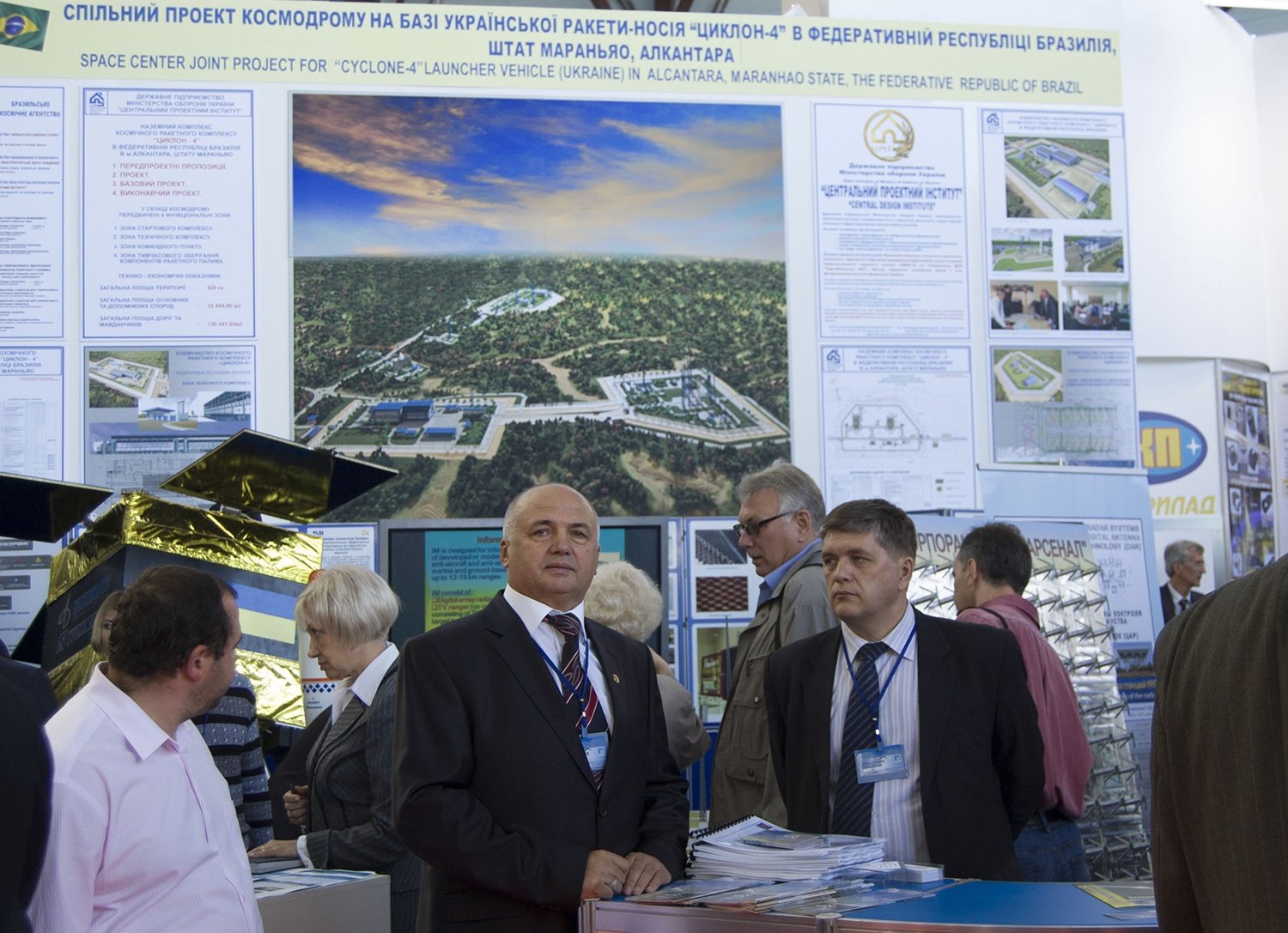
Олег Приймачук (у центрі) на тлі стенду з презентацією проекту космодрому “Циклон-4″ у Бразилії, розробленого Центральним проектним інститутом Міноборони України. Фото: з особистого архіву Олега Приймачука
Під час візиту в Бразилію Кучма підписав із місцевою владою меморандум про створення спільного центру польотів. 50% вартості будівництва космодрому оплачувала Бразилія, 50% – Україна. І ми безкоштовно використовуємо стартовий майданчик, платимо тільки за комунальні послуги. В Україні є конструкторське бюро “Південне”, Центральний проектний інститут, завод, але немає свого стартового майданчика. А цим проектом ми б закрили повний цикл.
Спочатку планували будувати космодром в Індонезії. Проект називався “Еліпсо”, брали участь США, Україна, Ізраїль, Аргентина, Сінгапур. Ми вже розробили концептуальний проект, і раптом американці повідомляють: “Хлопці, там намічається переворот”. У підсумку довелося відмовитися від політично нестабільної Індонезії та укласти угоду з Бразилією.
– Коли космодром буде готовий?
– Він уже готовий на 30%, але втрутилася Росія. Точніше, у Бразилії почалися антиурядові протести. Не сумніваюся, Кремль і там підлив олії у вогонь, скористався ситуацією, щоб усунути з ринку конкурента.
Бразилія межує з французькою Гвіаною, де одночасно з нами росіяни почали будувати свій космодром. Теж комерційний проект, тільки у них для важких ракетоносіїв, а в нас – для середніх. Задовго до анексії Криму і вторгнення на Донбас Путін дав негласний указ відмовитися від будь-якої кооперації з Україною в питанні побудови космодромів.
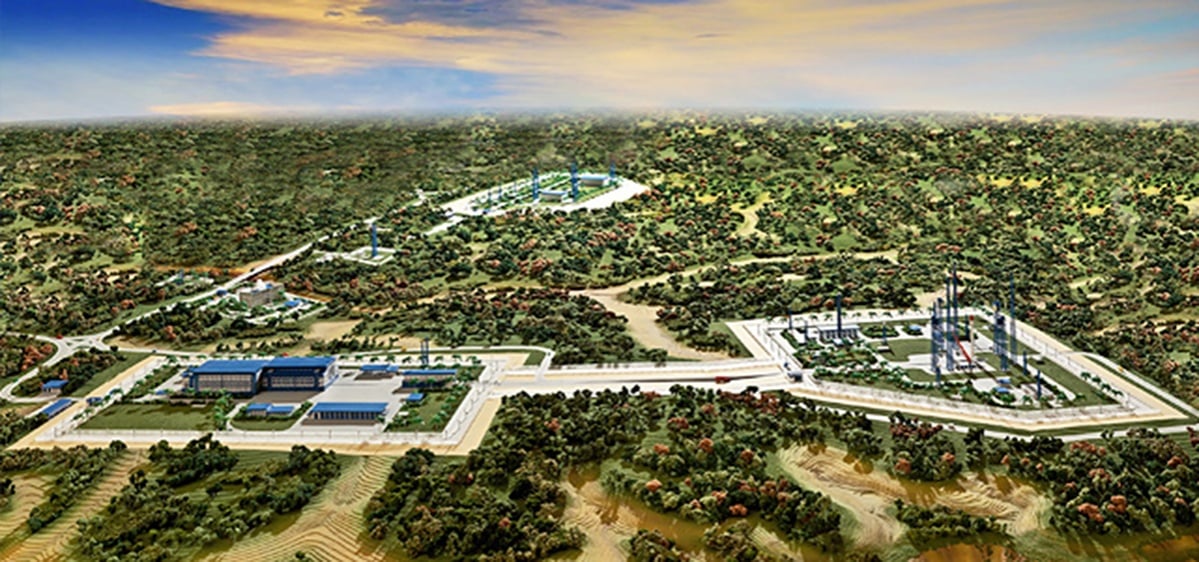
План розміщення споруд українського космічного ракетного комплексу “Циклон-4″ на космодромі “Алкантара”, Бразилія. Фото: space.com.ua
Коли ми все одно на 30% побудували космодром, у 2015 році раптом надійшов офіційний документ: так і так, у зв’язку з політичною та економічною ситуацією Бразилія в односторонньому порядку розриває контракт. За кілька місяців до цього Бразилію з офіційним візитом відвідав Путін. Думаю, Кремль комусь із місцевих вищих чинів добре дав “на лапу”. Зараз відбуваються міжнародні арбітражні розгляди.
– Усе одно не зрозуміла, чому РФ так важливо було не дозволити завершити український проект? Ви самі сказали, що наш космодром у Бразилії був розрахований на ракети середнього класу, а російський у сусідній Гвіані – на важкі ракетоносії.
– Це як два величезні торгові центри, які конкурують за споживачів. У нашому випадку – це два космодроми, хоч і розташовані на відстані тисяч кілометрів один від одного, але й вони, і ми збираємо з усього світу комерційні пропозиції щодо запуску супутників, наприклад. Конкуренція.
На жаль, Україна не повністю виклалася, щоб хоч якось зрушити з мертвої точки проект. Ми намагалися через Національне космічне агентство України і Фонд держмайна пояснити, попросити хоча б високу українську делегацію скерувати, але… загалом, утратили потужний проект. Та ще й нашому підприємству бразильська сторона заборгувала $200 тис. Ми подали всі документи, але поки не бачу підтримки з боку Української держави в досягненні повернення грошей.
– Кучма за своїми каналами не може допомогти?
– А що він може зробити, якщо його рідне дітище “Південмаш” та КБ “Південне” на очах падають?
Мета була наздогнати і перегнати США, на це нічого не шкодували. У підсумку 10-річна холодна війна і гонка озброєнь роздягли СРСР догола
– Ви довго пропрацювали на Байконурі – першому і найбільшому у світі космодромі. Як ви туди потрапили?
– Мене перевели туди з Капустиного Яру – найпершого в СРСР ракетно-космічного військового полігону в Астраханській області. На Байконурі я пропрацював вісім років – із 1979-го до 1986 року. Ми запустили проект, і мене відпустили додому, в Україну.
– Що за проект?
– У 1976 році в Радянському Союзі почали розроблення комплексу “Енергія – Буран” – масштабної програми багаторазової транспортної космічної системи. Рада Міністрів СРСР ухвалила створити на Байконурі будівельне управління, розширити будівельні війська і скерувати фахівців з усього Союзу. Спочатку приїхали півтори тисячі офіцерів, частину з них відсіяли за пияцтво, недисциплінованість, профнепридатність. Я потрапив на космодром із другою хвилею, відфільтрованою, у березні 1979-го.
Усі сили було скеровано на створення космічного апарата багаторазового використання: ракета-носій “Енергія” виносить на орбіту космічний корабель “Буран”, який далі літає в космосі як літак, а потім повертається на Землю.
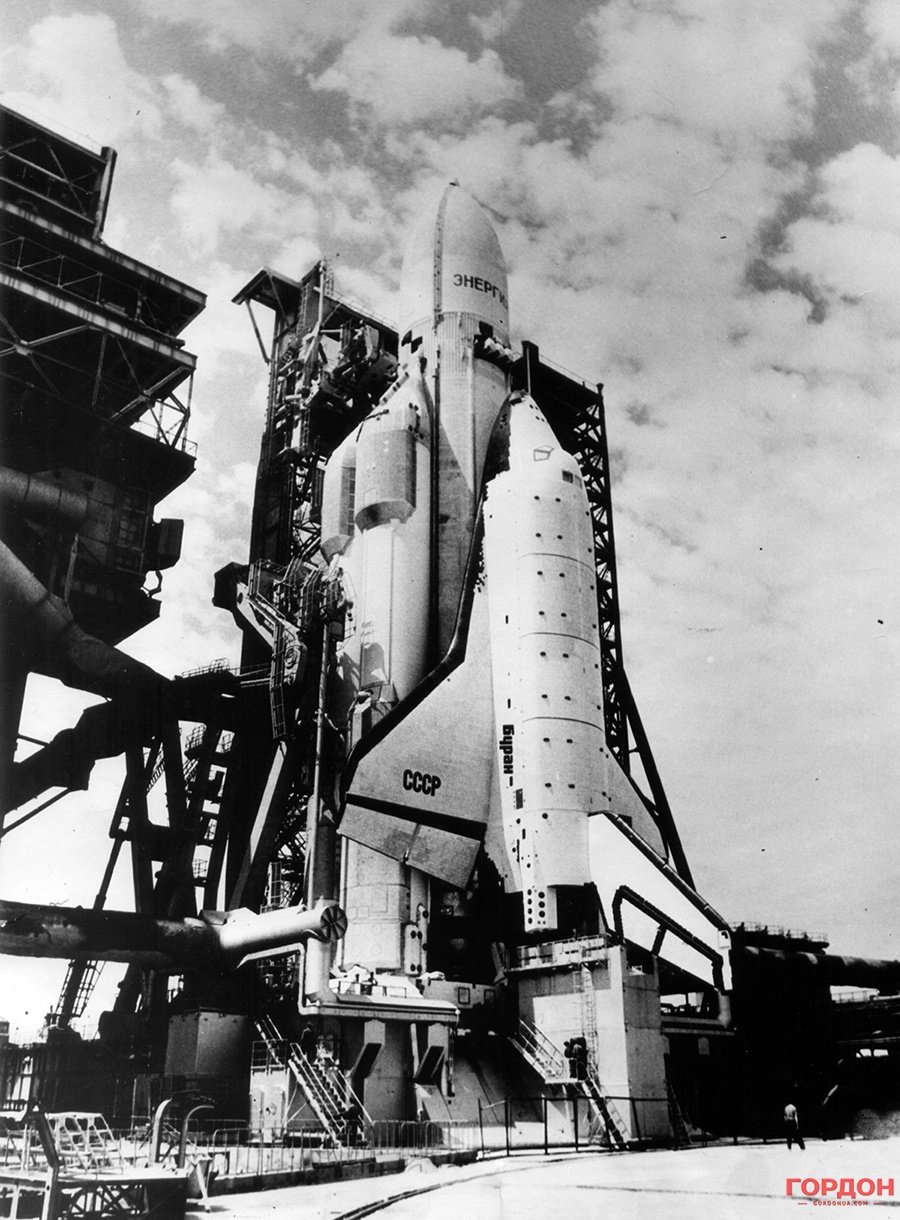
Космодром Байконур, Казахстан. Ракета-носій “Енергія” з багаторазовим космічним кораблем “Буран”. Фото: з особистого архіву Олега Приймачука
Така програма – ду-у-уже дороге задоволення. У США була схожа програма – “Спейс Шатл”, вони зробили набагато більше запусків, а СРСР – усього два. Востаннє “Буран” здійснив два витки навколо Землі і приземлився в повністю безпілотному автоматичному режимі (“Шатл” міг здійснювати посадку тільки на ручному управлінні). У ті часи – неймовірне, величезне досягнення! Але дуже фінансово затратне, за сьогоднішніми мірками щонайменше $6 млрд.
– Дивний бізнес-план: вгатити $6 млрд заради всього двох запусків, а потім закрити проект.
– Мета була наздогнати і перегнати Америку, на це нічого не шкодували. У підсумку 10-річна холодна війна і гонка озброєнь роздягнули СРСР догола: до 1989 року у країні був страшний дефіцит, а на прилавках – порожнеча.
У космічній програмі брали участь абсолютно всі міністерства Радянського Союзу, реалізація була на особистому контролі міністра оборони СРСР Дмитра Устинова. Усі графіки, таблиці з датою і вартістю возили на затвердження до Москви. Я був присутнім практично на всіх великих нарадах.
– Протягом 10 років на нарадах ніхто жодного разу не порушив питання, що гонка озброєнь, зокрема витратна космічна програма, підривають економіку держави?
– Творці “Енергії” і “Бурана” – знамениті вчені, генеральні конструктори – між собою не завжди ладнали: не було Корольова там (Сергій Корольов, видатний радянський учений, уродженець Житомира, головний конструктор ракетно-космічної промисловості СРСР, помер у 1966-му. – “ГОРДОН”).
Постійно був тиск зверху: швидше, у темпі, давайте! І махина закрутилася, мало не половина заводів усієї країни на це працювала, тільки військових будівельників на Байконурі було 45 тис. Коли у травні 1986 року вперше запускали “Енергію”, двигуни не були достатньо випробуваними, ракета піднімалася вгору і так вібрувала, що ми думали: “Зараз вибухне”. Сирим усе було.
Ракета впала, вибухнула, вигоріло все, а капсулу з космонавтами вітром почало зносити просто в полум’я кілометром у діаметрі
– Протягом вісьми років вашої роботи на Байконурі невдалі запуски були?
– Були, водночас ні тоді, ні зараз цієї інформації офіційно ніде не публікували.
– Майже 30 років минуло, думаю, гриф “таємно” неактуальний, розкажіть.
– Вересень 1983-го, запуск із “гагарінського старту” – майданчика №2. Двоє космонавтів, Геннадій Стрекалов і Володимир Титов, заряджені, усе готово.
На Байконурі є два майданчики, із яких можна стартувати з людським ресурсом, – майданчик №2 (основний) і майданчик №31 (запасний). Принципова відмінність від вантажних стартів – ракета має плавно підніматися, інакше велике перевантаження для людського організму. Щоб забезпечити плавне піднімання, потрібно, щоб гази кудись ішли. Тобто облаштовують великі газоходи – щось на зразок величезної ями у формі балалайки.
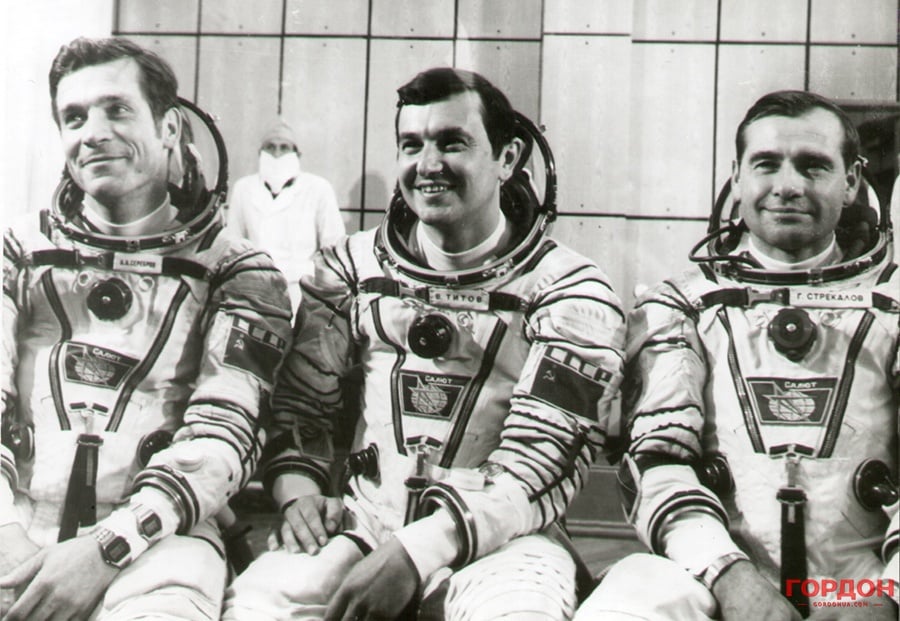
Радянські космонавти Олександр Серебров, Володимир Титов, Геннадій Стрекалов. Фото: з особистого архіву Олега Приймачука
На той момент запасний майданчик №31 закрили на ремонт. Усі зібралися на майданчику №2, кінооператори зі студії Довженка приїхали знімати запуск. Ракета піднімається і раптом починає завалюватися на бік газоходу. Повністю заправлена ракета з космонавтами!
Головний конструктор і начальник гарнізону одночасно натиснули кнопку “відстрілювання” – тобто відстрелити капсулу безпеки з космонавтами. Ракета впала, вибухнула, вигоріло абсолютно все, а капсулу з космонавтами вітром почало зносити просто в полум’я кілометром у діаметрі. Полум’я такої високої температури, що метал плавився.
– І?..
– Слава богу, вдалося уникнути трагедії.
– З’ясували причину невдалого запуску?
– Призначили державну комісію, дали тисячу осіб, вони по сантиметру все навколо прочесали, зібрали кожен елемент. Виявилося, що в одного з ракетних двигунів клапан не відкрився, вада.
На Байконурі є величезне кладовище ракетних двигунів із 1955 року. Їх випробовували, але нікуди не вивозили, оскільки таємна експериментальна розробка, режимний об’єкт. Я був на цьому кладовищі – це величезні гори двигунів.
На Байконурі влітку спека +47 °С у тіні, у вухах дзвенить. Узимку -30 °С, вітер страшний. Знаєте, скільки людей від спеки та холоду померло!
– Це правда, що з Байконура було дуже важко звільнитися, військові навіть готові були їхати на війну в Афганістан, аби вирватися з космодрому?
– Потужна державна програма, гонка озброєнь, холодна війна, на кону – престиж СРСР, його науки й техніки, і зарплати непогані. Зверху було спущено негласний наказ нікого з військових фахівців із Байконура не відпускати, навіть на вищі посади. Але в людей ситуації різні: сім’ї, діти, комусь лікуватися треба, от деякі й писали рапорт на Афганістан, бо тоді командування не мало права тобі відмовити.
– Воювати з талібами легше, ніж працювати на космодромі?
– В Афганістані потрібні були і військові будівельники. Я навіть одного такого знав, запитував: “Навіщо ти туди лізеш, у тебе ж сім’я?!” Він відповів: “Я там два роки побуду і повернуся додому”. Після Афганістану давали свободу вибору місця служби, та й імовірність загибелі в будівельників була невисокою.
– А ви думали про Афганістан?
– Ні-і-і, абсолютно, що ви! Я вісім років пропрацював на космодромі і буквально випросив у начальства повернення в Україну.
– Престижна робота, гарна зарплата, космодром… Що вас не влаштовувало?
– Коли моїй дитині було чотири рочки, ми з нею прилетіли в Москву. Приземлилися на військовому секторі аеродрому Внуково-3. Син вийшов із літака, побачив траву, квіточки і… почав їх їсти. У мене сльози потекли, розумієте?
– Ні, усі малюки так роблять, вивчають світ.
– Та він не бачив зелені на тому Байконурі! Це ж Казахстан, там ні лісів, ні трави – суцільний степ, випалена земля. Улітку спека +47 °С у тіні, кисневе голодування, у вухах дзвенить, перебіжками від тіні до тіні переміщаєшся. Узимку -30 °С, снігу мало, вітер страшний. Знаєте, скільки людей від спеки та холоду померло!
– Нічого не розумію: будуєте космодром, запускаєте ракети в космос, а люди від холоду і спеки вмирають, як це?
– На Байконурі було приблизно 65 майданчиків малих і великих. Ми жили на майданчику №10 – військове житлове містечко з будинками, школами, ресторанами, плюс там же космонавти до польотів готувалися. Містечко на 110 тис. жителів, практично обласний центр, тільки колючий дріт за периметром.
Найближчий майданчик космодрому на відстані 18 км, найвіддаленіший – 95 км. Між житловим містечком і космодромом постійно їздив мотовоз – це щось схоже на електричку, остання йшла рівно о 22.00, якщо не встиг – доводилося їхати додому на авто.
А тепер уявіть: дикий мороз, сильний вітер, машина глохне – чи то бензин закінчився, чи то привід-ремінь тріснув. І все – зв’язку немає, немає рації, мобільних не придумали. Навкруги нікого, тільки степ. Щонайбільше півгодини при -30 °С, і людина починає замерзати.
Ми завжди возили із собою запасні ремені для машини, бензин, а багато водіїв були недосвідченими солдатиками, призовниками по 18–20 років. Офіцери шинелі палили, тенти, щоб зігрітися, але жодної системи патрулювання між космодромом та житловим майданчиком не було. Протягом того часу, що я працював, 10 таких смертельних випадків було. Загалом, я про одне мріяв: повернутися додому, в Україну.
Проект “стіна Яценюка” – непрофесійний, плюс показуха. Прикордонники розповідали, як місцеві жителі відкручували і секціями огорожі несли собі в городи
– Правда, що саме вашому інституту доручили виправляти “стіну Яценюка” – мережу оборонних споруд на кордоні з РФ?
– Частину “стіни” вже побудовано. Хотів би я знати, хто проводив експертизу цього проекту, оскільки технологічно і технічно його було виконано непрофесійно. М’яко кажучи. Дуже багато помилок, відхилень. Проект виконано без урахування властивості ґрунтів і умов місцевості, а саму “стіну”, точніше, сітку, пальцем легко розколупати.
– Може, на етапі виконання припустилися помилок, а спочатку проект був нормальним?
– Ні, сам проект непрофесійний плюс показуха. Прикордонники розповідали, як місцеві жителі відкручували і секціями огорожі несли собі в городи. Зараз усе виправляємо: проектуємо водовідводи, пункти моніторингу, вежі, систему виявлення-оповіщення-патрулювання. Прикордонні війська з нами працюють, задоволені. Загалом, робота триває, але більше сказати не можу – закрита інформація.
– Як інститут пережив економічний спад останніх років?
– Важко, звісно. Самі шукаємо замовлення, до того ж щомісяця перераховуємо 500 тис. грн податків до бюджету.
У нас узагалі нещасний випадок був. Як добрі господарі, ми тримали рахунки у двох банках. Один із банків НБУ ліквідував, а в нас там на рахунку 6 млн грн було. Уявляєте, які це гроші для підприємства з 200 осіб? Тримісячна зарплата з повними преміями всім співробітникам накрилася, та ще на тлі економічної кризи.
Ми десятки листів написали – марно, відповідь одна: “Ви в черзі, поки фізособам не виплатимо, не чекайте”. На папері перспектива повернути гроші є, а фактично – ні, оскільки 47 банків протягом двох років впало в Україні. До того ж у кожному нібито був куратор від НБУ, який мав стежити за всіма операціями банку, мав знати, що діється! Точно можу сказати: уся ця “чистка банків” – державний злочин проти держпідприємств, яких це стосується.
– Останнє запитання. Після початку війни з Україною чи підтримуєте ви відносини з російськими колегами, із якими навчалися і працювали в радянські і пострадянські часи?
– Телефонували кілька разів, вони кричать: “Що у вас там відбувається? Ви фашисти!” – от і вся розмова. Під час спроби якось порозумітися одержую відповіді – копію кремлівської пропаганди.
Знаєте, нещодавно до нас в інститут один військовий прокурор приходив, із відкритому ротом на все дивився: “Як ви багато живете!” І навіть не запитав: “Як вам це вдалося?” Не поцікавився, як ми змогли вижити, зберегтися і розвиватися. Ніхто спасибі не сказав колективу за те, що зберіг і тримає в чудовому стані унікальні архіви і фонди.
Одне знаю: жодні америки з європами нам не допоможуть, треба тільки на власні сили розраховувати. А щоб розраховувати на свої сили, треба берегти і розвивати те найцінніше, що в нас є.